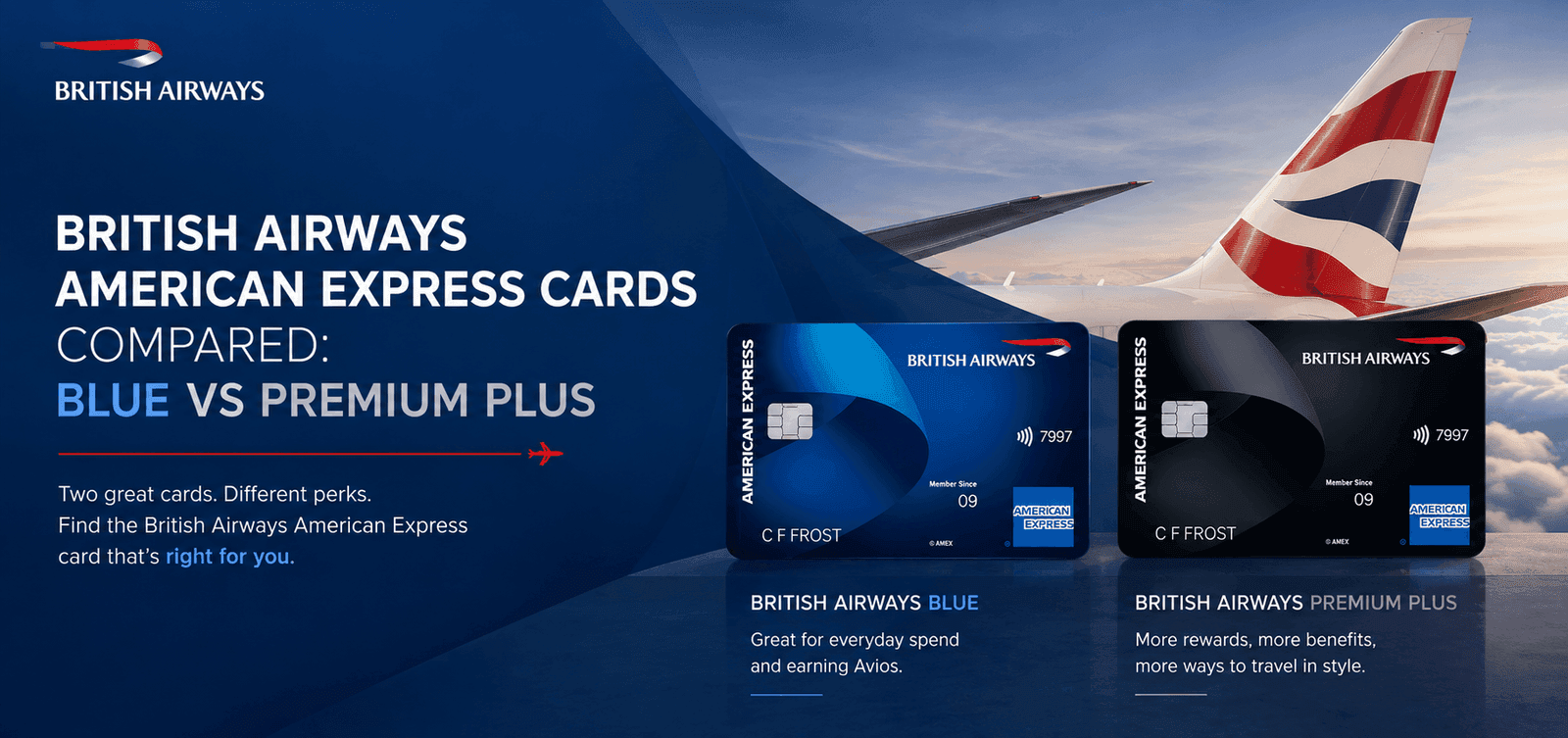
There are two British Airways Amex cards, and choosing
between them is one of the first real decisions you make as a UK points
collector. One is free. The other costs £300 a year. Both feed the same
currency into The British Airways Club, and
both hand you a 2-4-1 Companion Voucher once you spend enough — but the
voucher you get is very different depending on which card sits in your wallet.
This is a straight head-to-head: earn rates, the voucher differences, the
spend threshold they share, and the annual-fee maths that decides which one
actually pays for itself.
Why it matters
The card you carry does two jobs. It builds your Avios balance every time you
spend, and it determines the quality of the Companion Voucher you unlock. Get
this choice wrong and you either overpay £300 a year for a card you can't use
to its potential, or you leave the free card on the table when a modest fee
would have doubled your reward output. Because both cards draw from the same
£15,000 annual spend to trigger their voucher, the comparison is unusually
clean — the fee buys you a better voucher and a faster earn rate, nothing
more, nothing less.
How it works
The free card: British Airways American Express Card
- No annual fee.
- Earns a base rate of Avios per £1 spent — the lower of the two rates.
- Unlocks a Companion Voucher after £15,000 of spend in a card year.
-
That voucher is economy only (Euro Traveller short-haul or
World Traveller long-haul) and is valid for one year.
The paid card: Premium Plus
- £300 annual fee.
-
Earns a higher base rate of Avios per £1 — roughly double the free card.
-
Unlocks a Companion Voucher after the same £15,000 spend in a card year.
-
That voucher works in any cabin, including Club World
business class, and is valid for two years.
What both cards share
-
A Companion Voucher (also called the 2-4-1) lets a second
person fly on a reward booking while you pay the Avios for one traveller and
taxes and charges for both. Both must travel together on the same booking.
-
The voucher applies to BA, Aer Lingus and Iberia Avios reward flights.
-
Both cards are American Express charge/credit products, so acceptance is the
usual Amex caveat — useful, but not universal.
Because the trigger is spend-based, the practical question isn't "can I hit
£15,000?" but "which voucher do I want when I do?" For the full mechanics of
the voucher itself, see our guide to the
BA companion voucher.
Strategies
Match the card to the trips you actually take
The free card's voucher is economy-only. If your reward flying is short-haul
Europe — a few days in Rome, a long weekend in Lisbon — economy is fine, and
the free card gives you a 2-4-1 on those trips at zero annual cost. The
Premium Plus voucher only earns its keep if you intend to fly premium cabins
or long-haul, where the cash value of a second business-class seat dwarfs the
£300 fee.
Use the two-year validity as breathing room
A common reason people waste vouchers is the clock. The free card's voucher
expires in a year, which is tight if you're chasing award availability in a
specific cabin. Premium Plus gives you two years — enough to wait out a quiet
booking window and still redeem well. If your travel is unpredictable, that
extra year has real, if hidden, value.
Push earn rate where the fee is justified
The Premium Plus earns roughly twice the Avios per £1. Over £15,000 of annual
spend that difference alone claws back a meaningful chunk of the fee before
the voucher is even counted. Pair the card with the other
ways to maximise Avios —
shopping portals, dining, transfers — and the paid card's higher base rate
compounds faster.
Time your spend to the card year
The £15,000 resets each card membership year, not the calendar year.
Front-load large planned purchases into a single membership year to guarantee
you cross the line and mint the voucher, rather than spreading spend and
falling just short.
A worked value example
Say you spend £15,000 on the card in a year and use the voucher on two
long-haul reward seats.
-
Free card: two World Traveller (economy) seats to, say, New
York. You pay the Avios for one seat plus taxes and charges for both. A
second economy seat that might sell for around £450 costs you only the taxes
portion. Net gain: roughly £350-£400, at no annual fee. Add the Avios earned
on £15,000 of spend and you're comfortably ahead.
-
Premium Plus: the same £15,000 spend, but now the voucher
opens Club World. A second business-class seat that might retail near £2,500
costs you the Avios for one traveller plus taxes for both. Even after the
£300 fee, and even valuing Avios conservatively at around 1p each, the
second premium seat is worth many multiples of the annual cost.
The pattern is clear: the free card wins for economy short-haul flyers; the
£300 fee is almost trivial once a premium-cabin voucher is in play.
Common mistakes
-
Paying £300 for a voucher you'll only use in economy. If
you never fly premium cabins, the free card's voucher gives you most of the
benefit for none of the fee.
-
Holding the free card and letting the voucher expire. One
year goes fast when you're waiting for reward availability — book earlier or
consider upgrading.
-
Assuming the voucher covers the taxes. It doesn't. You
still pay taxes and charges for both travellers; the voucher removes the
Avios cost of the second seat, not the cash.
-
Splitting spend across cards. The £15,000 threshold is per
card, so hopping between products mid-year can leave you short of any
voucher at all.
Key takeaway
Choose the free British Airways Amex if your reward flying is mostly
short-haul economy — you get a genuine 2-4-1 at no annual cost. Step up to
Premium Plus if you fly, or want to fly, premium cabins and long-haul: the
any-cabin voucher and two-year validity make the £300 fee easy to justify, and
the higher earn rate helps pay for itself.
Let the Travel Smarter advisor find your best-value Avios and companion
voucher use, fees included →
FAQ
What is the difference between the free BA Amex and the Premium Plus?
The free British Airways Amex has no annual fee and gives an economy-only
Companion Voucher valid for one year. The Premium Plus costs £300 a year,
earns roughly double the Avios per £1, and gives an any-cabin voucher valid
for two years. Both unlock the voucher after £15,000 of spend in a card year.
How much do you need to spend to get the BA Amex companion voucher?
You need to spend £15,000 on the card within a single card membership year to
earn the Companion Voucher. This threshold is identical on both the free card
and the Premium Plus. The difference is the voucher you receive: economy-only
on the free card, any cabin on Premium Plus.
Is the BA Amex Premium Plus worth the £300 fee?
The Premium Plus is worth it if you fly premium cabins or long-haul. A single
any-cabin Companion Voucher used on two Club World seats can be worth many
times the £300 fee, and the higher earn rate recovers part of the cost through
Avios. For economy-only short-haul flyers, the free card is usually the better
choice.
Can I earn Avios on both BA Amex cards at the same time?
You can hold both cards, but the £15,000 spend threshold applies to each card
separately, so splitting spend risks earning no voucher at all. Most people
concentrate spend on one card to guarantee the voucher, then decide which
product matches their travel. See our
2026 Avios guide for how the
balances combine.
Does the companion voucher cover taxes and charges?
No. The Companion Voucher removes the Avios cost of the second traveller's
seat, but you still pay taxes, fees and carrier charges for both people. Both
travellers must be on the same booking and fly together. The voucher applies
to BA, Aer Lingus and Iberia Avios reward flights.
Which BA Amex card should a first-time collector get?
A first-time collector who flies mostly short-haul economy should start with
the free British Airways Amex — it carries no fee and still delivers a 2-4-1
voucher. If you already know you want long-haul business-class trips, the
Premium Plus makes sense from day one thanks to its any-cabin voucher and
faster earn rate.